
Have you or your kids ever had an injury and you weren’t sure if an ER or doctor visit is required?
In this series of workshops, Dr. Craig Meek will share information on common injuries and ailments to help you determine if it’s something you can monitor or treat yourself at home, and when to seek medical treatment in-person.
These free workshops can save you time and money on costly ER visits by giving you the information you need to make the best medical decisions for you and your family.
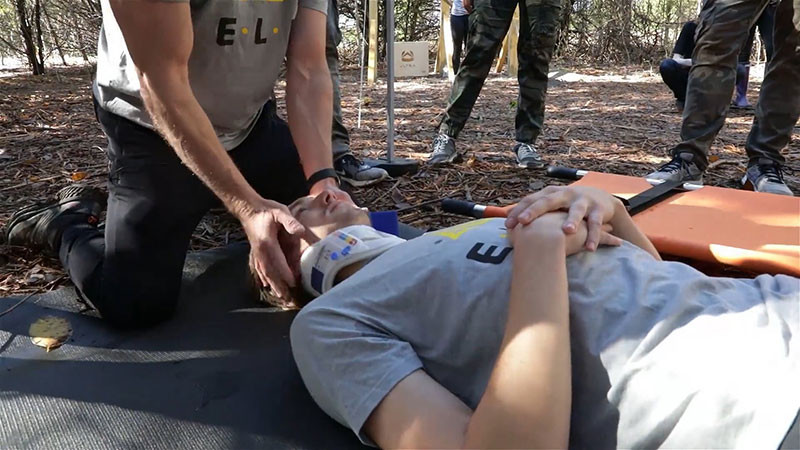
Head Injury
Video Chapter Links
- 1:07 Disclaimer *This does not take the place of seeking in-person medical treatment, but rather educates you on the questions a physician would ask when assessing a patient. If ever in doubt, please seek a medical professional.*
- 1:40 Dr. Meek Intro & Credentials
- 2:50 Dr. Meek
- 4:30 ELI Go-Bag
- 4:47 “Talk with the Doc” series goal
- 7:28 Three categories of patients when assessing a head injury (children, average healthy adult, high-risk/elderly)
- 7:53 Head injuries-children
- 8:28 CAT Scans-what they detect/diagnose and when needed
- 10:00 When a child needs a CAT scan-3 criteria
- 12:00 CAT Scans-average healthy adults
- 12:40 High-risk/elderly or anyone on blood thinners-go to the ER for head injury
- 13:20 Head injury misnomers
- 13:37 Head injury on temple could be high-risk
- 14:30 Do I wake up someone who had a head injury or keep them from sleeping?
- 15:46 Main symptom of significant head injury is vomiting
- 16:20 Concussions with normal CAT scan and recovery from head injuries
- 18:01 Lacerations-when stitches or staples are necessary
- 19:01 At-home treatment for small lacerations
- 19:23 High-risk/Elderly head injuries
- 19:49 If on a blood thinner, ALWAYS seek medical treatment for head injuries
- 21:07 What is ELI?
- 22:07 Q&A/Discussion
- 25:13 One reason the risk level of head injuries increases with age
- 26:02 Home tip for head laceration to reduce swelling
- 27:24 ELI Bootcamp and Go-Bag #BecomeFearless of emergency situations
- 29:47 ELI My Doc *coming soon*
- 30:23 Mission and Vision of ELI
- 32:00 ELI Bootcamp Video
Cold/Flu
Video Chapter Links
- 0:27 Disclaimer *This does not take the place of seeking in-person medical treatment, but rather educates you on the questions a physician would ask when assessing a patient. If ever in doubt, please seek a medical professional.*
- 0:49 Dr. Meek Intro & Credentials
- 1:52 Dr. Meek
- 2:03 ELI 2 main goals>Bootcamp and lecture series to educate on common injuries/ailments
- 4:02 Difference between viruses and bacteria
- 7:18 Is this a virus or bacteria?
- 8:30 Misnomer-fever means bacteria
- 8:50 Misnomer- “just a virus”
- 9:38 Cure to a virus is your own body
- 9:54 Virus overview-Covid and flu
- 13:14 Different treatment methods for covid
- 17:38 Tamiflu
- 17:52 Covid treatments for low-risk patients> Tylenol, Motrin, fluids, vitamins, OTC
- 18:21 Viral testing in ER-downfalls
- 20:48 Bacterial infections>respond well to antibiotics
- 22:51 No longer a “flu season” as viruses evolve
- 23:10 Current strains of Covid are typically much less severe and is very similar to flu virus
- 24:00 Two week self-isolation for Covid not currently necessary due to exposure, timeframe should be when you are symptomatic
- 26:55 Homeopathic methods can’t be proven by scientific method, but can be helpful
- 28:21 Course of viruses such as Covid/Flu is 4-5 days
- 28:54 Q&A
- 32:08 ELI Bootcamp Video
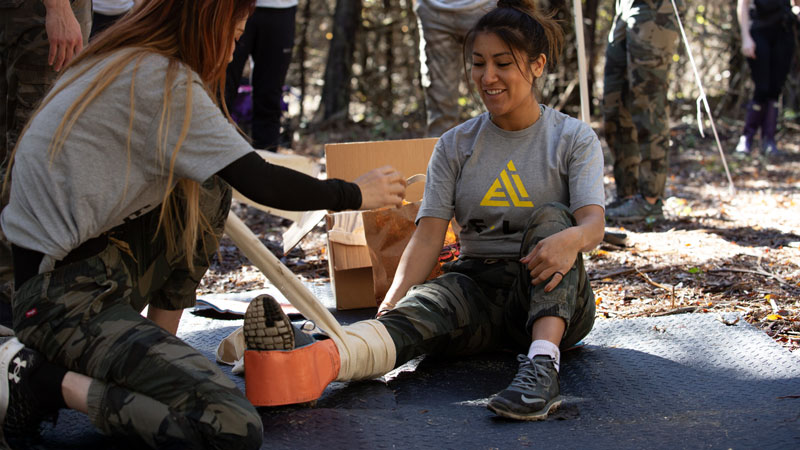
Ankle Injury
Video Chapter Links
- 1:02 Dr. Meek Intro & Credentials
- 2:00 Disclaimer *This does not take the place of seeking in-person medical treatment, but rather educates you on the questions a physician would ask when assessing a patient. If ever in doubt, please seek a medical professional.*
- 2:19 Dr. Meek
- 2:55 Emergency Leadership Institute/ELI Bootcamp
- 4:18 Basic Anatomy Components
- 5:10 Pulled/Torn Muscles
- 5:55 Sprains/Torn Ligaments
- 6:11 Fractured/Broken Bones
- 6:35 Dislocations
- 8:25 Misnomer-”I heard a pop-has to be broken”
- 9:05 Misnomer-Swelling
- 9:45 Ottawa Ankle Rules-If patient meets criteria, X-ray not necessary
- 14:35 Home care if you pass Ottawa Ankle Rules-ICE-(Ice, Compression, Elevate)
- 16:34 Ankle brace, wrap, etc can be purchased at pharmacy or sporting goods store
- 17:20 Walking on ankle sprain will not cause harm
- 18:23 Medicines-Anti-inflammatories beneficial
- 19:15 No follow-up or MRI needed for ankle sprains
- 20:00 Always outliers, so if home care is not helping, seek a medical professional
- 22:00 Normal healing time for sprained ankle is variable, generally 3 weeks or more depending on severity
- 23:00 Extremely bruised/swollen toes-means you need to elevate
- 24:10 If no improvement within a week-10 days with swelling/pain, seek medical professional
- 24:40 When can you return to athletics-the Hop Test
- 27:47 Emergency Leadership Institute

Back Pain/Injury
Video Chapter Links
- 1:02 Disclaimer *This does not take the place of seeking in-person medical treatment, but rather educates you on the questions a physician would ask when assessing a patient. If ever in doubt, please seek a medical professional.*
- 1:20 Dr. Meek Intro & Credentials
- 2:02 Dr. Meek
- 2:40 Back and neck pain is very common
- 2:45 Cervical or lumbar radiculopathy-typical back/neck pain
- 3:40 NOT typical back pain includes symptoms such as: (1) abdominal pain (2) fever (3) vomiting (4) significant fall (5) blood in urine (6) no significant precipitating event
- 5:14 Basic anatomy-vertebrae with discs in between. Small tears in between discs will occur throughout life causing bulged discs
- 7:35 “Throwing your back out” is result of torn discs bulging out
- 8:25 X-ray will not show discs, only MRI will show that. You will not get an MRI done in the ER as it has to be scheduled due to insurance, etc. You will be referred to your primary care physician or a specialist.
- 10:08 Bad herniated discs will heal on their own 9 out of 10 times
- 10:32 Take an anti-inflammatory to reduce the root cause of pain (corticosteroids are the strongest, but at home you can take Aleve, Advil, Motrin). Muscle relaxers and pain meds will only help symptoms but not address the cause of pain.
- 11:35 Medicines for back/neck pain, preventative measures
- 12:09 OTC Medicines-Aleve, Advil, Motrin
- 12:28 Typically small twisting injuries when relaxed are most common causes of disc herniations
- 13:10 Preventative-get a good cushion underneath your heel-spongy running shoes or heel inserts
- 14:28 Sitting for long periods of time-take breaks to get up and stretch
- 15:06 Firm mattresses are great for back/neck pain and issues
- 16:06 Be careful of narcotics for pain relief-dulling the pain can keep you from moving your neck or back in ways that it shouldn’t be moved since you don’t have the pain to let you know, and aggravate the herniated disc more.
- 17:54 3 ways to prevent further herniation of discs (not things to work on during a back/neck injury)
- 26:50 If back/neck pain is not improved in 6 weeks with OTC anti-inflammatory meds, seek a specialist
- 27:19 Q&A
- Do inversion tables are effective for reducing overall pain or disc compression?
- 29:30 Options with a specialist may include steroid injections or surgery (for non-typical back/neck pain or injury.
- 31:33 Emergency Leadership Institute and Bootcamp
- 33:05 ELI Bootcamp video